None of this was known. Not to Big Mama in Amite, not to the Singletaries, not even to my mother, nor the generations who carried the Bunch middle name forward without knowing what it meant or where it came from. The African ancestry of John Punch had by the early nineteenth century been entirely absorbed into the family. Whatever whispers may have existed were silenced by a social order that made such origins dangerous to acknowledge, and simply by the passage of time with the erosion of memory across generations.
The secret held for nearly four hundred years.
It was the presidency of Barack Obama that cracked it open. When Ancestry.com researchers documented Obama‘s mother’s descendant, John Punch through the Bunch family of Virginia, the genealogical world took notice. Court records, land deeds, wills — a paper trail running from a 1640 Virginia courtroom to the Carolinas, to Tennessee and Kansas, to the mother of a sitting president. And then there was the DNA testing of living Bunch descendants, which revealed a genetic signature tracing back to a single male ancestor of African ethnicity, in the region of Cameroon, Africa (Angola).
Recently, tracing our family’s ancestor through the same Bunch-Singletary line brought the same revelation to my sister and me. The middle name that Doctor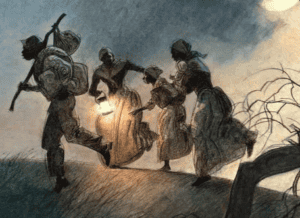 Benjamin Bunch Singletary carried into the Confederate Army in 1862 was the Bunch surname — through Margaret Bunch, to the Virginia landowners of Louisiana plantations — all the way to a man condemned in a July courtroom in 1640. The DNA confirmed what genealogy suggested. There is African ancestry in this line, carried through generations who had no idea it was there.
Barack Obama is my distant cousin through the shared ancestry of John Punch. Obama‘s line ran from Virginia’s Bunch families through the Tennessee frontier and across to Kansas. My family’s line followed the Natchez Trace into Tennessee, south, to the Louisiana parishes.
The Story of John Punch
“The third being a Negro named John Punch shall serve his said master and his assigns for the time of his natural life here or elsewhere. “
— Virginia Governor’s Council, July 9, 1640
John Punch was born around 1605, with the other first Africans in Virginia coming from the Kingdom of Ndongo — a world of civilization and cultural richness, now largely erased from popular memory.
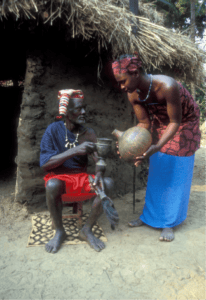 Ndongo was a powerful kingdom of the Mbundu people who lived in what is today Angola, Africa. At its height, the kingdom stretched to the Atlantic coast. The people of Ndongo lived in villages organized around extended family clans, with tradition central to daily and spiritual life. This is the world John Punch likely knew as a child — a world of community, language, ceremony, and continuity.
In the early 1600s, the Portuguese launched a devastating military campaign against Ndongo, where villages were burned, families torn apart, and captives marched in chains. They were forcibly removed from the region and sold into slavery. Captives spent weeks or months awaiting the arrival of slave ships, where they were loaded and bound for the Americas.
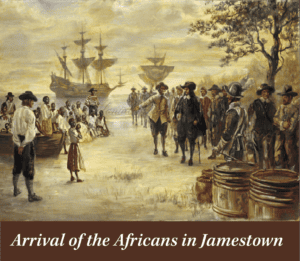
John Punch was among those swept up in this wave of violence. The exact arrival to Virginia in the 1600’s by slave ship is not recorded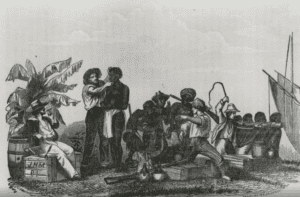 in history. In the 1600’s Virginia was a struggling colony of approximately 700 English settlers, most of them engaged in tobacco cultivation. The Africans were assigned to the households and plantations of these early planters, even though at that time English law had no category of racial slavery. John Punch was assigned to the household of Hugh Gwyn, and remained as what was then an indentured servant. The white and black indentured servants (slavery at that time did not exist) associated with each other as workers together in similar circumstances – side by side in the field the white servants and the black planted tobacco together with little distinction between white and black “indentured servants” with women and men intermingling.
In the summer of 1640, John Punch decided that he and two other indentured servants who were white would escape. Unfortunately, they were caught, returned in chains, and brought before the Virginia Governor’s Council. The white men were not given a one year additional sentence of servitude, but John Punch was treated differently. The Virginia council ruled that he would “serve his master for the rest of his natural life.” He became the first slave in the American colonies, because he was African.
John Punch married a white woman (not uncommon in those days). They had children, so he left descendants who in later generations migrated to Tennessee, Louisiana, and Kansas. Obama’s mother’s family immigrated to Kansas and mine to Louisiana.
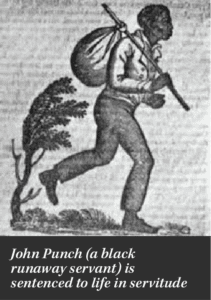 The Bunch family grew and prospered across Virginia. By the early 1700s, John Bunch the Third (name changed from Punch to Bunch) was petitioning the General Court of Virginia for permission to marry a white woman named Sarah Slayton — a petition that triggered a legislative crisis over racial classification. The children of John Bunch freely married white neighbors. The Bunch line was, by that point, largely absorbed into the white community of Virginia, their African origins receding with each generation into invisibility.
The Slave Traders
Much to my dismay, some of my ancestors were among the largest slave traders in America — reported by historical sources as the third largest in the country. My fourth great-grandfather, John Deas, who married Elizabeth Allen grew up in Scotland, and immigrated to Charleston, South Carolina in 1749. They were traders of rice, indigo, and other Carolina produce.
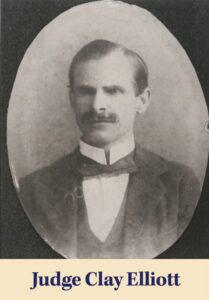
Another set of great-grandparents go back generations from Scotland, who was Dr. Robert Broun, a physician who arrived in Charleston in 1735 and settled on a plantation. His son, Archibald Broun married their daughter, Mary Dees, and their daughter Harriet Ann Broun, married Robert Elliott Junior, mother of Charles Eward Elliott, who were the parents of my great-grandfather, Judge Clay Elliott.
The Dees family, who had married into my direct ancestors, built their fortune on slave trade, which stands in stark contradiction to the ancestry of John Punch. Yet all of these lines — the traders, the enslaved, and their descendants — eventually united as one family in Louisiana.
The John Punch Descendants
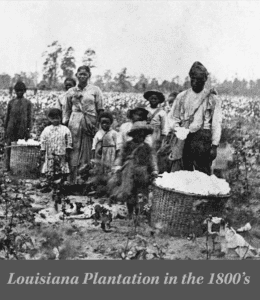
John Punch is my ninth great-grandfather. The Bunch descendants came to Louisiana as slave owners, while carrying the DNA of West Central Africa. This is not comfortable history. It is not the kind of thing families have historically chosen to record or pass down. But it is true. And as America now approaches the two hundred and fiftieth anniversary, it requires that kind of truth telling. The Punch line did not arrive in Louisiana as victims. They arrived as participants in the very system that had been inaugurated by the punishment of their ancestor.
The Louisiana branch of the Bunch-Singletary line, our line — had by the time of the 1850 census assimilated fully into the planter class of the Deep South, cotton plantations with slaves. Benjamin Singletary, father of Benjamin Bunch Singletary, was among them. They had traveled in the early American Republic and crossed the Natchez Trace, the ancient path from Nashville, Tennessee to Louisiana, with entire families in wagons and livestock moving along this road. Among them were the early members of our Bunch-Singletary
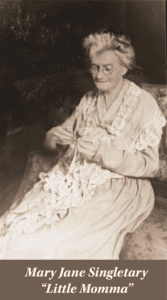
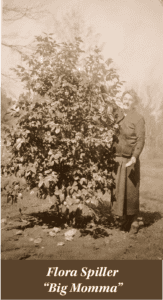
My great-great-grandmother, Mary Jane Singletary, “Little Momma,” was born into that Louisiana world, into a family shaped by that inheritance. Her daughter, “Big Momma,” Flora Spiller, is my namesake and married Judge Clay Elliot, my great-grandparents. Tracing the line back to John Punch does not simplify this family’s history. It deepens it, darkens it, and makes it more honestly American.
 .
. 
Conclusion
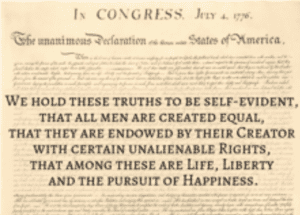 My family history, like the history of our nation, is full of contradiction. Our forefathers fought for equal rights for all, but throughout most of our history did not give women nor African Americans the right to vote. My ancestors were Christians. They were moral people with a deep sense of family and community. But in their world, they accepted slavery as a way of life as it was their livelihood.
America is celebrating our two hundred and fiftieth year with our struggles as a nation to obtain the promise of our forefathers that all men were created equal in the Declaration of Independence in 1776:
When the Civil War erupted in 1861 the men in our family joined the Confederate Army. On their return in defeat, they found their way of life in ashes and picked up the pieces of their shattered lives. Slavery had been abolished forever but true equality is our enduring struggle for all Americans.
“The Dark Past” by Elise Talmage Lieb from Child of the Bayous
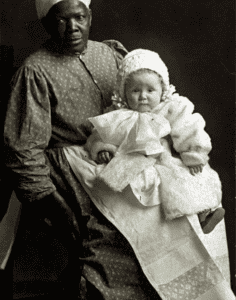
“Doe doe lil baby”
Rocking and rocking to sooth little hurts
But did you hurt too and did we know?
Dark rich voices crooning low
Doe doe doe doe
And did we not pay a living wage?
It was ever so; it was ever so.
And were black babies left without a breast
No voice to sing them “doe doe doe.”
And did you crawl beneath the house
While white folks flushed?
And did we sew the seeds of hate?
Jim Crow Jim Crow
I remember I remember
“Can I tote you books Miss Leeze”
The songs that we sang.
We don’t want to remember
The songs that we sang
Listen please listen; it went like this
“Doe doe lil baby
Doe doe lil baby
Sleep on your mammy.”
I can not sing as once you sang.
Dark rich voices crooning low;
Violet, Nicey, Mary
Gone so long ago
So long ago
It hurts to know.
Our sins were scarlet;
Our virtues were few.
Stay Tuned for The Civil War…Flora Templeton Stuart
“My Family’s Journey through war and ruin”