Introduction
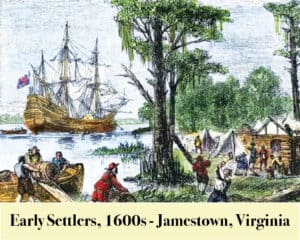
Celebrating America’s 250th anniversary with the story of my ancestors – colonial families whose four hundred year odyssey mirrors the founding of our nation. They crossed the Atlantic in the 1600’s seeking religious freedom and opportunity carrying with them the courage and determination that would shape a new world. Their journey chronicles America’s story itself: hardship endured, sacrifices made, and incredible fortitude displayed across generations. Through my ancestors we trace the path from early settlements in Jamestown, Virginia, through the Revolutionary War, westward expansion by flatboat to Louisiana, and the building of new lives in an expanding nation.
Woven through this heritage are family secrets passed down quietly from one generation to the next- whispered truths that add depth and complexity to our understanding of who we are and how we came to be.
This narrative unfolds in two parts. The first traces colonial beginnings from early settlements in Jamestown, VA through conflicts and friendships with Native peoples who travel by flatboat during the Indian uprisings to Louisiana. Stories handed down through generations bring my ancestors to life.
The second part follows the journey of my ancestors with names like Singletary, Bunch, Bankston, Rambo who immigrated from Europe to America to the 1600’s building new lives. Stories of the Revolutionary War, Civil War reconstruction in the deep south brings our history through the lives of those lived.
As America celebrates it’s 250th anniversary it is more than a family history, it is a testament to the founding spirit of our great nation told through the lives of those who lived it generation after generation from the first clearing of wilderness to the present day.
The Spiller Story: A Family Journey From Early America
I can still see my mother’s grandmother, Flora Spiller Elliott – my namesake – standing on the porch during our visits to family in Amite, a town just north of New Orleans with her long grey hair in a top knot tucked at the sides as we admired the beautiful camellias blooming beneath the grey moss that draped from the oak trees like curtains.
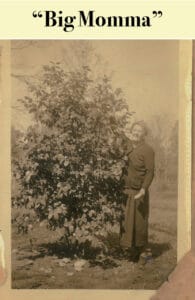
As a city girl, I was thrilled to chase chickens for dinner. Though my grandmother stood only five feet tall with a slender build, everyone called her “Big Momma” because her own mother had been such a tiny woman. At dinner I strained to catch whispers of family secrets – hushed conversations about our ancestors from bygone years. Their journey through past centuries offers a fascinating glimpse into the founding of our country. 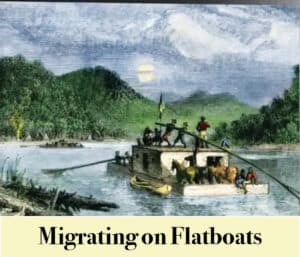
William Spiller, II, my 9th great grandfather, immigrated to Virginia in the 1600’s seeking opportunity in the new world with a promise of tobacco farming and land. These early years were brutal for daily existence. Women cooked over open fires, struggling with limited food and wearing the same clothes day after day. They worked constantly – tending gardens, making soap and candles, managing the household – often while pregnant with a high rate of infant mortality. Meanwhile, the men cleared land to farm, with backbreaking work. In time, the Spiller ancestors established themselves with tobacco farming until the soil in Virginia wore out. Seeking better land, they migrated on flatboats down the Mississippi river. These river voyages were treacherous and long. After a brief time in Georgia new opportunities opened up in Louisiana for land with fertile soil where they settled for generations in Amite, just north of New Orleans.
Service To Our Nation
We have numerous ancestors who immigrated from Europe in the 1600’s. There are a few notable ancestors who had a significant impact on the establishment of the Virginia colony in the 1600’s and our nation.
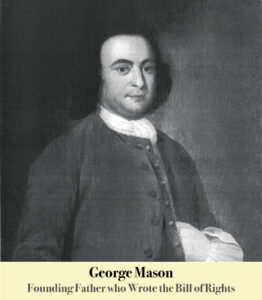 The Mason family were royalists who fled England to Virginia in 1651 settling at the Accoheek Plantation. One of my ancestors, George Mason, IV, played a pivotal role in drafting the Virginia Declaration of Rights (1776) which became the foundational document for the U.S. Bill of Rights. This declaration established our fundamental liberties including freedom of press, religion, and speech, the right to assemble and protest peacefully and the right to bear arms. Mason was a delegate to the Constitutional Convention where the Constitution was drafted.
Another notable ancestor was Colonel Robert Pitt, who immigrated to America in 1637 on the ship, Thunder, from England. He became a Virginia legislator and Colonel of Militia defending and protecting settlers from Indian uprisings along with being a successful planter and merchant.
Micayah Spiller enlisted in the Revolutionary War where he died of disease in 1779 while Blasingame Spiller served in the War of 1812. Their descendants served in World War I and World War II.
Powhatan
(Native American Ancestry)
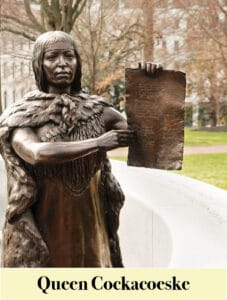
Flora Spiller Elliott (Big Momma, my great grandmother whom I knew and loved) on her deathbed whispered a family secret hidden for generations; that she was a direct descendant of Chief Powhatan’s family, through intermarriages in the 1600’s my 10th great grandfather, Chief Opechancanough. Tracing back from her ancestors has been a fascinating journey through generations offering glimpses into the lives of those who are a part of who I am. From Big Momma through her great grandparents – the Singletarys, Bunches, Andersons, and Dabneys – I discovered Susannah Swanborn in Virginia in 1653. Her mother was Queen Cockacoeske, my eighth great grandmother. Queen Cockacoeske’s grandfather was Chief Opechancanough, brother to Chief Powhatan and uncle to Pocahontas.
 Chief Powhatan’s people taught the early settlers, my ancestors, to grow corn, hunt game and navigate the waterways. Yet the colonists’ insatiable hunger for land eventually led to brutal conflicts. The Indian population, which had numbered in the tens of thousands, was reduced to a mere fraction by the late 1600’s through warfare and disease.
Queen Cockacoseke was a renowned leader of her Virginia tribe. During her thirty-year reign she sought to recapture her people’s former power while maintaining peace with the colonists – a delicate balance that earned her recognition as one of Virginia’s “Women of History.” Her legacy strength, diplomacy, and resilience serves as a guide to my life today.
Louisiana Swamps
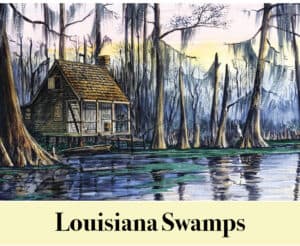
In 1802 my third great grandparents, Benjamin Singletary and Margaret Bunch embarked on a perilous journey by flatboats down the Mississippi river into the untamed wilderness of Louisiana – a land of swamps and dense forest with all their earthly treasures to include livestock, furniture, household goods, clothing, and their Presbyterian bible.
Before they even reached their destination tragedy struck. One child fell victim to an Indian attack during the voyage.
Upon arrival in Louisiana the men set to do back breaking work chopping cypress trees, wrestling swamps and building log cabins. Meanwhile the women grew crops, cooked, spun, sewed by candlelight, all the while raising five children.
With the one thousand acres gifted through a Spanish land grant the family transformed swamp land into thriving cotton farmland. By the mid 1800’s the Singletarys were prosperous planters on plantations – this success came with the moral strain of slave labor, a tragic compromise with the times.
Then came the Civil War. The Spiller men volunteered for the Confederacy, leaving the women and children alone to fend for themselves. When the men returned home they found their world shattered with fields abandoned. Cotton farming was over. They had lost everything.
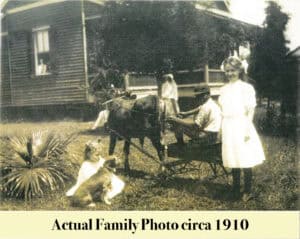
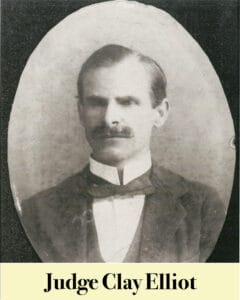 They joined the professional ranks, becoming lawyers, judges, politicians, and teachers. My great grandfather, Judge Clay Elliott (husband to Flora Spiller) attended Tulane Law School and served on the Louisiana Court of Appeals where he fought corruption under Governor Huey Long’s political machine. My great aunt, Maria Dubar, in 1929 became one of the few female attorneys in Louisiana and the United States. Flora Spiller (Elliott) was a high school principal supporting Uncle Wood Spiller through law school which delayed her marriage to Clay Elliott until she was thirty. She was 98 years of age when she passed. I vividly remember the wonderful times on visits from New Orleans.
Charlotte
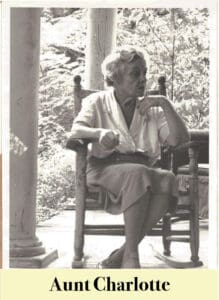 For years I would stop by the family graveyard on my way to New Orleans and feel the presence of my ancestors. My other stop was the family home in Amite where Flora Spiller Elliott and Judge Clay Elliott had lived in my childhood. Only Aunt Charlotte was left. She was mentally ill. She had been the prettiest lady in town with suitors knocking on her door. By the time she was forty her mind shattered like crystal on the floor. Trees and branches had tangled growth closed around the proud old home. I would knock on the door and call out “Charlotte, Charlotte, it’s Flora” and sometimes she would sit on the porch and chat. The last visit she called “Go away! You go away! You’re not my mother!” She thought I was the ghost of her mother, my namesake, Flora Spiller Elliott.

The old home had begun to crumble. Even the steps were falling away, but standing there under the trees laden with moss I could still hear the whispers of my great grandmother and my namesake continuing and feel the presence of my ancestors.
Years later my Aunt Flora (my mother’s sister) reclaimed the old homestead restoring it to its original beauty, giving life back into walls that had witnessed generations of laughter, tears and resilience.

Conclusion
My Search for my Roots has been a journey that carried me back through four hundred years of American soil and memory. It has been a remarkable glimpse into the past and who I am; a product of generations of struggle and survival. They endured hardship and uncertainty to bring forth a new life with the freedoms we so cherish and the opportunities we enjoy.

Child of the Bayous
By: Elise Talmage Lieb
Child to the wet lands
The swamp land
The bayou
Spawning and wriggling
With secret life,
Where ancient walls
Weep in the dampness;
And gray moss drops from the roofs
I gaze in horror
At the blazing sand
And the river bed
Like an ancient man
Grooved and wrinkled from heat
Where the angels shut tight
The windows of heaven
And refuse the gentle rain.