Introduction
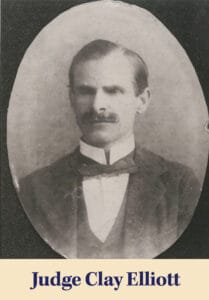
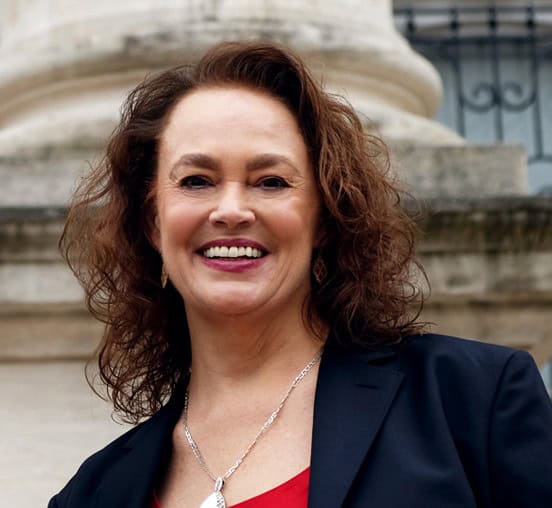
My great-grandfather Clay Elliott — “Papa” — is my hero, who has guided me in the practice of law. He served as a judge in the Court of Appeals in Louisiana in the 1900s. His family history, where he came from, and the generations that shaped him is the story of our nation — founded by remarkable people from all walks of life who had the courage and fortitude to immigrate to a new land.
Clay was a particular kind of man that the American South occasionally produced in the century following the Civil War — a man who understood the law of the downtrodden and those discarded by society.
He was also our “Papa.” My mother, in her book “Child of the Bayou”, recalled Papa as the most important man in town, which rubbed off on the grandchildren. His wife, Flora Elliott, my namesake, was my great-grandmother. In my mother’s description, Papa had the kind of looks that would terrify a criminal — shaggy brows over gray eyes as sharp as scissors, a brawny mustache, which made us giggle when Big Mama, my namesake Flora Elliott, would tell us to kiss Papa. He stood straight as a pine tree and fascinated me. She recalled a trunk of his filled with Confederate money that was worthless. Clay Elliott not only survived the Civil War and its aftermath, but he lived in Louisiana’s Florida Parishes, a violent swamp-edged territory called Bloody Tangipahoa.
When the night riders were circling, when the Ku Klux Klan had its hand in the court, when a man of Native American descent sat in the dock because of who he was rather than what he had done, when the governor of Louisiana, Huey Long, controlled Louisiana with his machine, Clay Elliott stood up for justice.
We will begin with the ancestral family that molded Clay Elliott from generations past.
The Elliott Line

There is a particular kind of courage that belongs to people who leave — not the courage of battle measured in minutes, but the deeper courage of departure that built our nation. The Elliotts had that courage because they had been forged by centuries of the hardest possible school: the Scottish Borders, where the Elliott clan had lived, fought, raided, and survived for generations on the contested ground between two kingdoms.
Robert Elliott Sr. — Born 1695, Roxburghshire, Scotland

Robert Elliott Senior was born in 1695 in Roxburghshire, the heart of Elliott Clan country. In his early years, he moved from Scotland and eventually made it across the Atlantic in 1737, arriving in Pennsylvania with his wife, Mary Rainey, and a family of children. They settled in the Pennsylvania backcountry of Cumberland County, where he built a farm and raised his family. He left behind ten children and the documented roots of a line that would travel further than he could have imagined.
George Elliott and the Revolutionary War
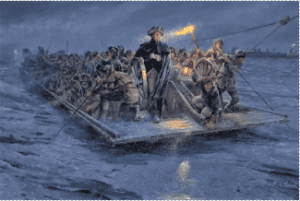
Among Robert Elliott Senior’s sons was a common ancestor, George Elliott. George was born in Scotland around 1725 and immigrated to America in 1745, settling in Cumberland County, Pennsylvania working as blacksmith.
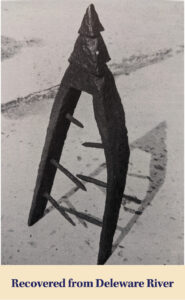 When the American Revolution began in 1776, his skills placed him at the center of one of the most dramatic engineering feats. The Continental Army was in retreat, with the fate of the American Revolution hanging in the balance:
Elliott blacksmiths were detailed from the Pennsylvania troops by General George Washington to make the huge iron spikes which were stretched with the “chevaux-de-frise” across the Delaware River below Philadelphia, preventing the British fleet from attacking the city. The Elliots fought in the militia with the Continental Army. There was another related Elliot line who immigrated from Gloucestershire in 1695 to Virginia. They are the direct ancestors to Judge Clay Elliot who eventually immigrated to South Carolina and Louisiana.
Papa and Big Mama
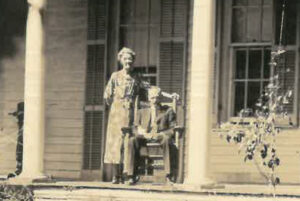
Clay Elliott was born in 1862 in Louisiana with his family shattered by the Civil War. He grew up knowing that his family had crossed oceans, continents, and frontier territories to reach St. Tammany Parish. He chose the law and went to Tulane University, which he paid for by selling his inherited land, then moved to Amite to practice law. Amite was a market town on the railroad, where violence was common and justice was not reliable.
He was elected state senator from Louisiana, serving from 1896 to 1900 and was later elected district judge. At that time, Papa was also mayor of Covington and practicing law.
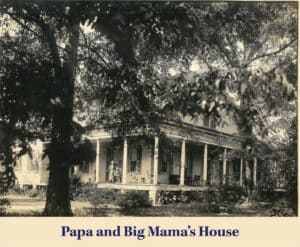 Clay Elliott married my great-grandmother, Flora Spiller Elliott — “Big Mama” — in 1892. She is my namesake, whom I knew and loved dearly. As a child, I often visited Amite and loved the country atmosphere so different from New Orleans where I lived. Big Mama would take me to get the chickens in the coop for dinner. This was very exciting for me since, as a city girl, I was not accustomed to farm life. In the evenings, we would sit by the cypress table eating wonderful, creole food, while the family would talk of days gone by. These visits to Amite will be cherished by me forever.
My mother told many delightful stories of her visits to the grandparents in Amite. On warm evenings, the family would line up in big rockers on the veranda — a large porch — to listen to crickets and talk about kinfolk many long gone. On chilly nights, Papa lay down on the walnut sofa with his head on Big Mama’s lap while she stroked him or slowly combed his hair. In the dark after bedtime, my mother could hear Papa’s voice echoing through the house, calling “Flora, Flora.” Big Mama slept on a cot in her sewing room at the rear of the house, but she would answer in the night, “Coming, Clay. I’m coming.” And then my mother could hear her bare feet on the boards as she clambered into the big four-poster bed where Papa slept, in her old-fashioned flannel gown and her gray hair in a braid down her back.
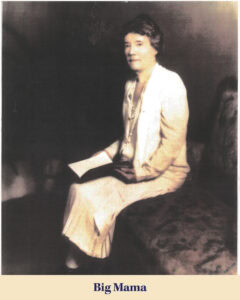 Big Mama lived through tragedy. Having survived the period after the Civil War when they lost everything, she worked as a high school principal, paying her brother’s way through law school until she was able to marry Judge Clay Elliott. Her greatest tragedy was the mental illnesses of her children. Her daughter Charlotte, who had been a teacher, eventually developed schizophrenia. My mother described Charlotte muttering angrily to herself in the middle of the night as she wandered through the kitchen, banging kitchen pots and pounding, moving in and out of mental institutions. My mother described Charlotte muttering “this terrible fear of mental illness that haunts me still.”
Her son Charles became an attorney. He would sit in an office with dusty law books and no clients. When they arranged a marriage for Charles, he ran from his wife before the wedding was ever consummated. Poor Charles spent his days and hours constantly washing his hands and brushing his teeth. He would not touch anyone but his mother, and eventually died in her arms. Charles Elliott suffered from OCD — obsessive compulsive disorder.
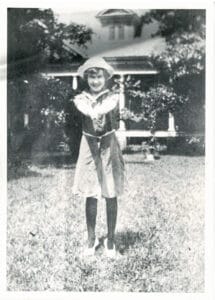 My grandmother, my mother’s mother, Pauline Elliott Talmage, who married my grandfather Goyn Talmage — “Poppy” — was her happy, normal child. But at the age of fifty-one, she tragically died of lung cancer in 1949. My mother who was very young at the time of her death could hardly speak of her mother without crying.
Poor Big Mama had lost her daughter and son, Charles, and was left only with Charlotte after Clay Elliott passed away. When Big Mama was on her deathbed, she told my mother that Charlotte had destroyed her happiness with her mental illness. I recall the day that Big Mama passed. I stood there, only a child, looking at Big Mama in the casket, being confronted with death. Her hair had been brushed as always with a top knot, puffed on the sides with a hairnet. I can still see Big Mama to this day laying in her casket, still as ice.
Bloody Tangipahoa — The World Clay Elliott Defended
Tangipahoa Parish — Bloody Tangipahoa — in the first decades of the twentieth century was systematically violent. Night riders operated openly. The Ku Klux Klan had its hand in the judiciary. The governor of Louisiana, Huey Long, participated in the 1891 mob murder of eleven Italian men in New Orleans. Native American families whose ancestors had named the rivers and settlements found the legal system was a weapon against them — a tool of prejudice. Clay Elliott made himself their defender.
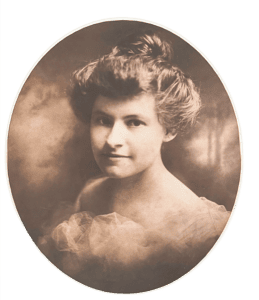 Papa was a man of courage and fought the corruption of Governor Huey Long, who had complete control of teaching positions and everything, including the courts. My aunt Charlotte, Judge Elliott’s daughter, had a fine teaching job. She had been threatened to lose her job if Papa did not change his anti-Long position. When told, Papa banged with his umbrella on the porch floor and said, “You may just have to lose your job. We cannot support Huey Long.”
My mother’s mother, Pauline Elliott Talmage — my grandmother — was frightened in New Orleans where they lived. One day, about six rough men came to her door. “Missus Talmage,” they said, “we came to see how you intend to vote.” My grandmother pulled my mother along for protection and responded in a shaky voice, “I’d rather not say.” When my mother went with her to the polls, she was met by the same men warning her about the assessment on her house. “Be careful, Missus Talmage,” they said. “Louisiana is in the armed grip of a demagogue, and all our elections are rigged — ballot boxes stuffed, ink ballots with the wrong kind of votes in certain parishes, voting all the names on gravestones.” When the news that Huey Long was shot came, my mother came running to tell her mother the news. Her mother said very sternly, “Elise, we never celebrate when someone has been hurt.”
The Avery Blount Case, 1909
In 1909, in Tickfaw — a Choctaw name meaning “where wild beasts shed their hair” — a constable named Avery Blount was charged with murder. Blount was of Native American descent, a lumber worker and local officer who had nothing to do with the killings. He was taken from his wife, Viola, and his two small children and transported to Orleans Parish Prison in New Orleans to await trial.
Clay Elliott took his case. He walked into the courtroom tangled in hooded night riders, political payoffs, and a judiciary that had already decided his fate. He found the evidence that proved his innocence.
“In 1909, twisted feuds spawn murder in Tangipahoa Parish, also known as “Bloody Tangipahoa,” Louisiana’s wild land where shotgun-pistol packing outlaws not only hide in swamps and dense forests, but also command the corridors of law-making and keeping places. Charged with murder and held in New Orleans Prison, young constable, Avery Blount, must rely on his strong family, motley friends, and eccentric attorney, Clay Elliott, to search for answers and reveal the truth of three murders that took place in the logging settlement of Tickfaw, Choctaw for, “wild beasts shed their hair here.””
— From Broken Chain: A Story of Bloody Tangipahoa
The victory cost him nearly everything, because those who had wanted Avery Blount convicted did not forgive the man who stopped them. But Clay Elliott persevered.
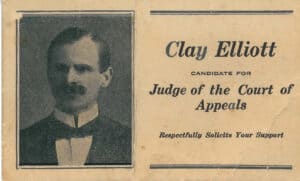
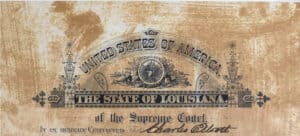 Clay Elliott won the election to the Court of Appeals of Louisiana, sitting in judgment over the very kind of cases he had spent his career fighting in the trial courts below. He died at seventy-four years of age in 1942, before Big Mama passed at age ninety-five. He had spent forty years in Louisiana’s public life as mayor, state senator, district judge, defense attorney during the most dangerous cases of his era, and appellate jurist through the most turbulent political decade the state had seen since Reconstruction under Huey Long.
He left behind a daughter, Mary Pauline Elliott, born 1892, who married into the Talmage family —my grandfather Goyn Talmage “Poppy” — linking the Elliott line to the missionary family through forty-three years in Amoy, China, to the streets of Amite, Louisiana. Their daughter, Elise Talmage Lieb, my mother, was a writer, philanthropist, and businesswoman and encouraged me to follow in the footsteps of Judge Clay Elliott in law.
Conclusion
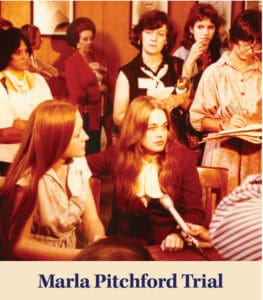 Following in the path of my great-grandfather, I served as Public Advocate for several years, representing indigent clients who could not afford legal counsel – becoming the first female attorney to practice in my community. Among my most notable cases was the defense of a young woman, Marla Pitchford, whose acquittal drew national attention. I have now spent fifty years in the law representing the injured, walking always in the footsteps of my hero, Judge Clay Elliott.
“Lay Me Not Down in the Piney Woods”
by
Elise Talmage Lieb from Child of the Bayous
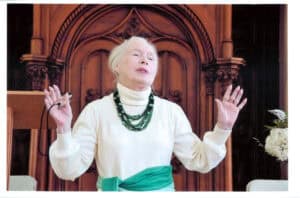
Lay me not down in the Piney Woods,
though my kin and my heart lies there,
and the lovely old graves at the end of the road
where Charlotte rides in the midnight air.
Lay me not down with the Puritans,
though elite and elegant their tomb,
as I have strayed from out the fold,
and they would not wish to grant me room.
For I trod upon wild grapes and romped with Cupid bear,
while grandmother lay in her black silk dress
with a tight little bun in her hair.
But rather lay me down the hill,
down on land that is mine,
pleased for the old log church, if you will,
and bring me a bit of bayou dirt,
a handful of rich black loam,
and bring some moss from a live oak tree,
and I will be at home.
By my mother, Elise Talmage Lieb
Stay Tuned for My Ancestral Story… Flora Templeton Stuart
“The Puritans”
Sources and Research Notes
Shirley Blount, Broken Chain: A Story of Bloody Tangipahoa (2015) — historical novel set in 1909; Clay Elliott appears as defense counsel for Avery Blount. Available on Amazon.
Elise Talmage Lieb, Child of the Bayou — memoir containing personal recollections of Papa (Judge Clay Elliott) and Big Mama (Flora Spiller Elliott).
World Biographical Encyclopedia (Prabook), entry for Clay Elliott — confirms birth October 13, 1862; Tulane University Law; State Senator 1896–1900; District Judge 1904–1908; Court of Appeal, Third District, First Circuit, 1924–1936; married Flora Spiller February 9, 1892.
Elliott Family Bible — George Elliott and Mary Henry; iron chains story confirmed in multiple independent family records.
Harriett Byron: Born 1798, South Carolina. Married Robert Elliott Jr. (1785–1820). Mother of Charles Edward Elliott (1813). Death date unknown. Parentage and further details not yet found in surviving records.
Family oral tradition transmitted through Mary Pauline Elliott Talmage, Elise Talmage Lieb, and Flora Templeton Stuart.
PHOTOGRAPHS: No photographs of Judge Clay Elliott have been located in online sources. Recommended: Tangipahoa Parish Clerk of Court, 110 N. Bay Street, Amite, LA 70422, (985) 748-4146; Southeastern Louisiana University Regional History Collection, Hammond, LA; Louisiana Supreme Court Archives, New Orleans; Tulane University Special Collections.