Introduction

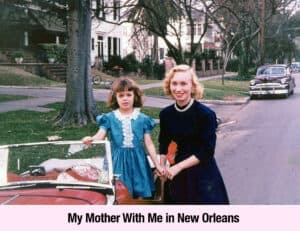
My mother, Elise Talmage Lieb’s life is an example of what might have happened if Scarlett O’Hara had lived at a time of women’s liberation. Born in New Orleans, my mother’s life spanned an extraordinary era – from the time of the Great Depression and World War II through the Civil Rights Movement and into the age of computers. Brought up with a strong religious background from her ancestry with missionaries to her father (Goin Talmage “Poppy”) she had a strong moral commitment to doing what was right, empathy for the poor, teachings from the Bible while disturbed about the norms of segregation. Her basic personality never changed throughout her life; she was always kind, rebellious, extroverted and loving people while ahead of her times. Many of us remember my mother with her southern charm delighting us with her stories (she was prolific writer) and warmth to all she met.
Early Years
 Women of the south in our family were expected to go to college, marry young and stay in the home and in New Orleans they often had maids. My mother lost her mother while she was still young which brought her to tears even in her later years. She often viewed the world differently than her father (“Poppy”) with her independent spirit and creative mind.
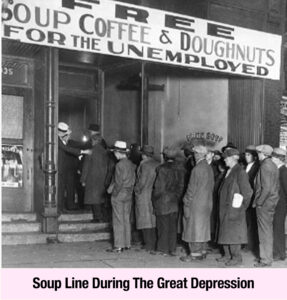
Living through the depression she recalled family friends and neighbors coming to their home to get soup my grandmother had made. The poverty with people of means who lost all affected her throughout her life. My mother always had a rainy day fund regardless of her situation.
Life As A Housewife
She was expected to marry early so by age nineteen with the blessing of her father (their approval was expected) she married my dad (Rupert Stuart). As a young woman, despite her brazenness and defying authority (particularly her father) and her popularity with boys, her underlying confidence was weak (unknown to anyone at that time she had dyslexia) and never could spell or tell left from right) a trait which I inherited.
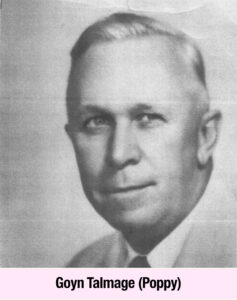
Ridiculed by her father and Aunt Matilda for being scatter brained and always losing things they did not pay much attention to her uncanny ability to recite literally hundreds of poems and her knack for story telling. 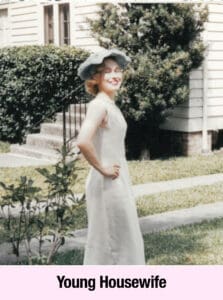
One of her experiences as a young housewife revealed her courage in these early years. When my mother saw a young mother about to lose her child in a divorce she organized the neighborhood with women who united and came to court to testify that the discarded wife was not unfit but indeed an abused wife. The Southern Belle was becoming a woman of courage and my mother, Elise had found her calling.
 My dad joined the service and served in World War II in the early years of their marriage. My dad was proud to serve while my mother, also proud of him, was a pacifist so troubled by war.
 Summer vacations were spent in the Arkansas mountains. One memorable trip a young boy named Kenny, who took care of the horses with his father, lost one of his eyes and looked deformed. The poor young boy held his head down in shame. My mother took action and invited Kenny to our home in New Orleans where she got him an artificial eye. A shy, withdrawn child, Kenny’s personality blossomed and he returned to his family in Arkansas after spending several months in our home in New Orleans. This was the beginning of my mother reaching out to help anyone who crossed her path who was in need. This she did throughout her life.
Homemaking had never been her forte and when she discovered the real estate business she became one of few women selling real estate at that time in New Orleans. Indeed, when Poppy found out he was very disapproving since she was expected to be a homemaker.

Kenilworth
My mother, with dreams like Scarlett O’Hara of living on a plantation, moved our family from uptown New Orleans to Kenilworth, one of the oldest plantations in Louisiana. Though an amazing experience to live in a plantation (a movie was even made there) my mother’s marriage was in crisis and she felt trapped. Even the move to Kenilworth Plantation in St. Bernard Parish, a historic plantation home grazed with massive columns and porches all around, did not save her marriage.

With her active life outside the home and her husband drinking heavily, they drifted apart. She divorced and remarried a sociology professor whom she had met as a student in a course she was taking at college.
Chapel Hill
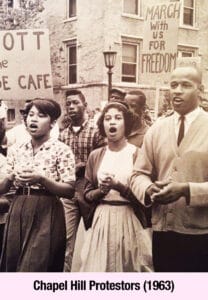 In 1963 we moved with her new husband to Chapel Hill, NC from the segregated south in New Orleans where African Americans were denied equality to the hotbed of the civil rights movement in the 1960’s. The struggle for equality awakened in our family with a passion to make a difference in the world; fight for justice for all. I joined my mother in protest while we attended church as the only “white folk” singing “We Shall Overcome” which became our slogan as the Vietnam War divided the nation.
My mother’s real estate career blossomed in Chapel Hill, but we were uprooted again to Florida where the real estate market was depressed. My mother not being able to sell real estate devoted herself to activities with the Presbyterian church until we made our last move where we remained the rest of our lives.
Bowling Green
 My mother, Elise thrived in her life as a single woman and as the first female real estate broker in Bowling Green. She sold houses before she knew the names of the streets. When she asked to join Multiple Listing Service (MLS) real estate group they refused to allow her to join since they did not have any female brokers at the time. Taking off on her own with her natural charm her business thrived. She ran her business out of her home on Chestnut Street in a small brick house filled with antiques including chandeliers from the plantation. Life blossomed with men courting her daily. She went square dancing and enjoyed house parties to celebrate occasions. She even purchased 500 acres of farmland in Riverside.
Often being the object of “investigations” as the first female real estate broker who was independent one day the chief state inspector arrived and knocked on her door. My mother given her friendly ways told Fred Lieb that she would like to show him the farm she had just bought. After they toured the land she showed him the mailbox along the road with the new name of the farm “Eden.” My mother said to him “the problem is there’s no Adam to till Eden.” That became a joke she told later about their meeting. Fred apparently got the hint so he made a phone call to the headquarters and said he would have to resign from the case. He was in a relationship with the woman he was investigating whom he married.
Now at Elise Lieb Realty the newly painted business signs kept the same slogan as before “Stop at the Pink Sign”; signs that were scattered across Bowling Green. Pink was her color. In fact, Elise loved the color pink so much that she often dressed in pink outfits with a wide-brim hat. Retaining her southern belle she even painted her home at Chestnut pink with the yard flourishing with pink roses while driving her pink car.
Kentucky Farm Life
My mother’s life flourished on the farm with Fred where they enjoyed friends from all different walks of life. Much of their social life centered around churches in the local area. My mother was writing and directing plays every season while Fred became a lay minister giving wonderful sermons and singing with his rich baritone voice.
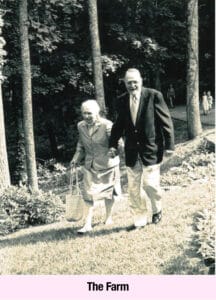 Not only did my mother write plays, but throughout her life she wrote poems and short stories of her childhood and more recently Kentucky life. Her collection, titled “Child of the Bayous” is a treasure. Other stories were so humorous especially when she read them out in her deep southern accent that people loved to listen. She wrote stories that went back to her ancestors in the Civil War, one about a relative who ran off with a Yankee soldier. Reading one of her childhood stories at an event at Barnes and Noble before an audience of English faculty, shoppers who heard her voice which was beamed on the loudspeaker, would come over and take a seat.
My mothers life was further enriched when she met Mrs. Deputy, the founder of the BG immigration center who called upon her to help the newly arrived immigrants. One day my mother received a call to pick up a couple with children who had just arrived from the Ukraine and were waiting for her at her house at Chestnut. They exited the car with very few belongings but one notable item, a washing machine that they had carried from across the ocean. Without hesitation my mother drove them to her farm in Richardsville where they lived with her learning English and our culture. Eventually Michael and Ira and their children all became physicians even though upon their arrival they could not speak a word of English. This story is a tribute to the thousands of immigrants that have helped form our nation since the 1600s.
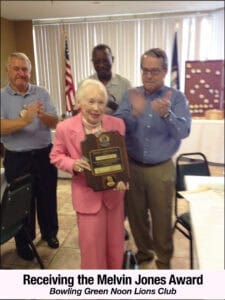
An active member at the BG Lions Club when my mother arrived at meetings everyone would clap in delight and often listen to her stories and her talks. She received several awards for her charitable service.
Her Final Journey
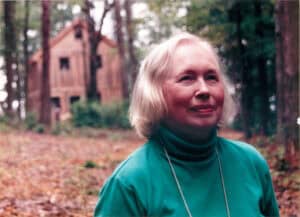
With Fred’s passing my mother left the farm and returned to her beloved home on Chestnut Street. Her final years overflowed with love and laughter. Her pink house on Chestnut became a gathering place for people from all walks of life, each drawn by her captivating stories of the south. She had an extraordinary ability to befriend anyone – even strangers she met at Wal Mart would find themselves invited into her home, soon becoming dear friends. My sister, Katherine, who stayed with her in the summers compared the house to “Grand Central Station.”
Conclusion
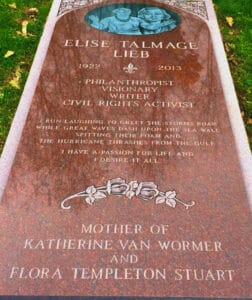
My mother’s poem “The Opposite of Death is Desire” revealed in her own words what defined her: an unwavering passion for life. Always reaching out to help those who crossed her path, she was never lonely. She has been my guide and now my guardian angel – there for me in troubled times, instilling in me the confidence to succeed by encouraging me to go to law school as a young single mother. Her passion for making a difference in the lives of others remains her greatest gift to me.
The Opposite of Death is Desire
By: Elise Talmage Lieb
“Desire nothing,” the wise sage says,
And some sit in a lotus position
Pushing down their knees on the cold bare floor
While the Buddha squats unmoving and unmoved
And Quakers perch drab and gray
On wooden chairs with folded hands,
And nuns who married Jesus count their beads and inhale peace.
Some of us were born from still waters
And long for gentle rain,
But I came squirming from the womb and
Crying out for great gulps of life.
Not for me the lotus position,
Not for me the Quakers silence,
Not for me the holy beads.
I crave motion and chatter and
Fingers interlaced with others;
Rather the red dress of the harlot
Than the chill of the sister’s bed.
I run laughing to greet the storms roar
While great waves dash upon the sea wall
Spitting their foam and
The hurricane thrashes in from the Gulf.
I have a passion for life and
I desire it all.
Stay tuned for our next chapter, my mother’s ancestral story- “Virginia Settlers in the 1600s to Louisiana”
 Co-authored By:
Katherine Van Wormer – M.S.S.W., PhD.
My sister has published several books including a must read book, The Maid Narratives: Black Domestics and White Families in the Jim Crow South.